









Blog
Energy In – Energy Out
Jul
by

I have been reading a lot lately on the theme of energy. Pulling these ideas I’ve gathered together into this Blog has its challenges, but it’s a step in the right direction to understand things better.
It is a given that we need energy to exist. It could be used to produce food, obtain water, or keep warm or cool, for example.
But it takes energy to get energy. The goal is to produce as much energy as possible with the least possible energy input.
Let’s start with oil well Leduc #1 in 1947. That was the beginning of the Alberta oil boom. It took 1 barrel of oil to extract 1,500 barrels; a ratio of 1:1,500. With a bit more investigation, we’ll see how extraordinary that ratio is.
The oil sands have a ratio of about 1:5. That is not a typo. What it lacks in efficiency, it makes up for in volume.
Wind power is about 1:12, and solar is about 1:8.
Conventional, or what we could call large-scale, nuclear reactors have a ratio between 1:25 and 1:100. Small modular reactors (SMRs) being considered approach 1:1,500. There we are, back to our oldest and best level of efficiency.
Lastly, fusion derives power from pushing things together, whereas nuclear fission releases energy by pulling them apart. I’ve been watching this development over the past few years. A couple of US researchers ran into serious career problems when they ‘proved’ they had developed a way to use fusion. Nobody could replicate their experiment.
Scientists around the world continued to work on developing the science behind the theory of fusion. It takes huge, and I mean huge, amounts of energy to get any energy out. My earliest recollection was that less energy was produced than was put in.
Gradually, the energy difference between input and output decreased. Recently, I’ve read reports that they have achieved a consistent small surplus. My poor understanding of the physics makes me sceptical of promises that we are on the verge of unlimited power. Water power was often described in textbooks during my childhood as ‘unlimited.’ The future quickly caught up to that optimism.
Maybe it will become another option for how we generate power.
As an aside, my standard position on the feasibility of new ideas is to be a ‘Doubting Thomas,’ as they say. Even when the next shiny thing are truly better, we have invested a lot of money in what we currently have. We have millions invested in fossil-fuel cars and the infrastructure to keep them running. Gas stations versus charging stations. The owners of our local gas stations are building their retirement funds with these businesses. Suddenly switching to charging stations leaves all their equity behind while requiring more equity to be invested in the future.
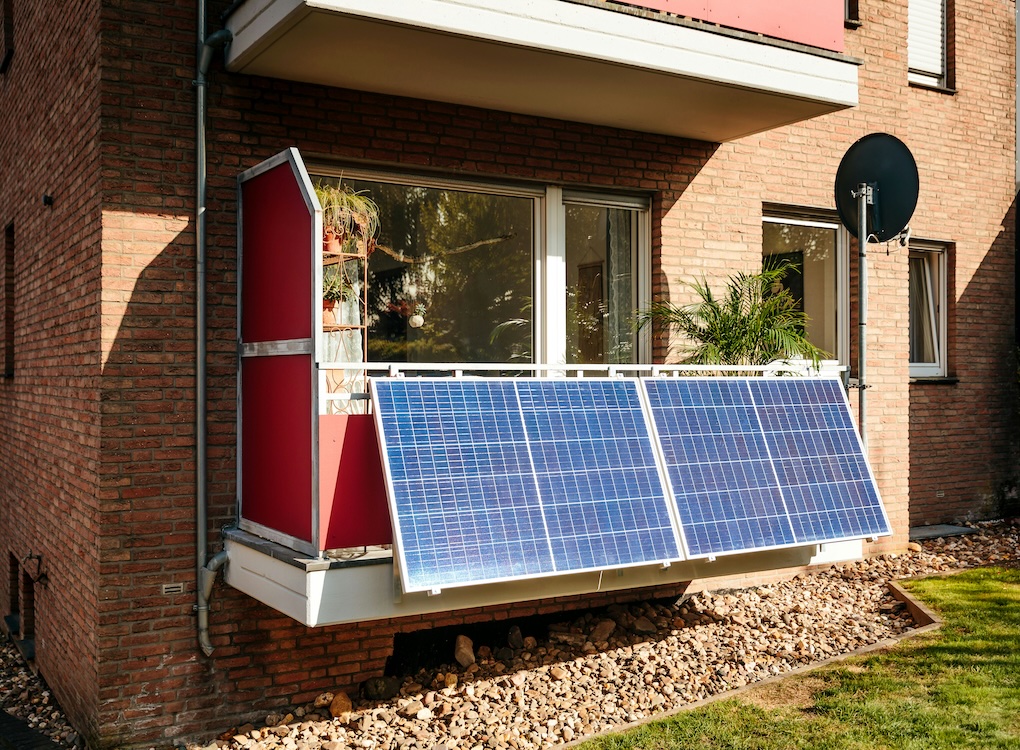
Some countries in the European Community, EU, have solar panels that attach to apartment balconies and plug in to a wall outlet or a battery. Cost – a few hundred dollars.
As we move, seemingly ever faster, into the future, change will only accelerate. Having our eggs in multiple baskets spreads the risk and allows different people and businesses to access technology at their own pace.
Please give this a bit of a think. On a scale of 1 to 10 – 10 being an early adopter – where would you place yourself on the emerging technologies continuum? Have you explored any of them with the intent to learn more rather than incorporating them into your life?
Please comment: Send me an email with your bit of a think. I am curious about your thoughts.
Photo by Yuma Solar on Unsplash
If you enjoyed The Blog, please share it with others. Thanks.
And my thanks to St. Albert’s 50+ Activity Centre for making this Blog possible.
Volunteer Blogger
