






Blog
Time to Question It
Oct
by

I am a big movie fan. I love a wide range of genres. I’ll even watch genres I don’t usually enjoy to see what I’m missing.
As a late teenager, I remember going with my friend on a Friday night in downtown Montreal to catch a movie. The part I never questioned was the now-absurd behaviour of walking into the darkened theatre at any point during the movie. I’d watch it to the end, then wait just a few minutes for the film to start a new showing from the beginning. I can’t believe that was normal.
I’m a big Alfred Hitchcock fan. I have all his films except one, which seems to have been lost forever, with no known copies. When Hitch’s Psycho, the film that altered showering for generations, was shown in theatres, a big part of the advertising campaign stated that patrons would not be admitted after the show began. The audacity! Hitch’s questioning of how we absorb storytelling changed things forever.
There are other societal habits and beliefs that are equally unchallenged.
We accept that public transportation is a good thing. Most municipalities with a public transit system set a target revenue to cover a certain percentage of total costs through ticket sales. Users pay – but not the full cost.
For about $100 each year, I can buy a ‘ticket’ that allows me to drive on any roadway, including residential streets, main streets, and highways, at no additional cost, except for a few toll roads and bridges.
We don’t question it.
Here are a few options we could look at. What if public transportation was available for unlimited travel with the purchase of an annual pass for $100?
What might be some intended and unintended consequences?
There would be many more public transit customers. Would that be a bad thing? More buses, more routes, and the associated higher costs. But roads would have fewer vehicles, requiring fewer repairs. With fewer cars, parking lots in urban areas could be more viable for conversion into housing and business structures.
Intercity services might flourish. Remember the day when Greyhound buses served rural parts of the province.
For a third example to question, let’s look at the accepted practice of parking on the street in front of our homes. When I was a youngster, I lived on a small street with just 18 semi-detached houses. There was plenty of room to park in front of our house.
Then the city questioned this by restricting parking on certain days to only one side of the street. We had to walk across this quiet residential street, home to endless hockey games, to reach our car way over there. The audacity!
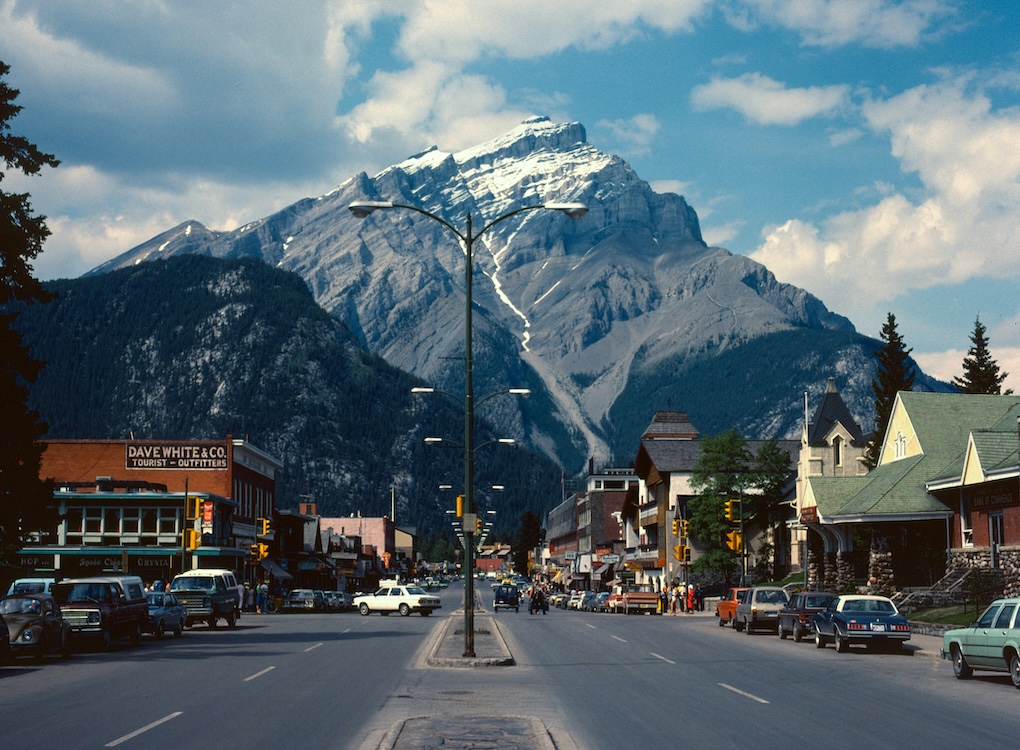
It’s a small step to question the right to park in front of businesses in urban centres, particularly. With so many rideshare pick-ups and drop-offs, drivers struggle to find safe places to stop on busy streets. The same goes for delivery trucks.
Maybe all that curbside footage should be shared differently.
Some big cities are charging a toll during daytime hours for vehicles entering the downtown core. If rideshare vehicles are permitted free entry and trucks are admitted free in off-peak hours, the curbside issue changes noticeably.
Please give this a bit of a think. What things go unquestioned in your life? How would you change it? What is one possible unintended consequence?
Please comment: Send me an email with your bit of a think. I am curious about your thoughts.
Photo by Krista Joy Montgomery on Unsplash
If you enjoyed The Blog, please share it with others. Thanks.
And my thanks to St. Albert’s 50+ Activity Centre for making this Blog possible.
Volunteer Blogger
